
7 Myths About FAST That Need to Die
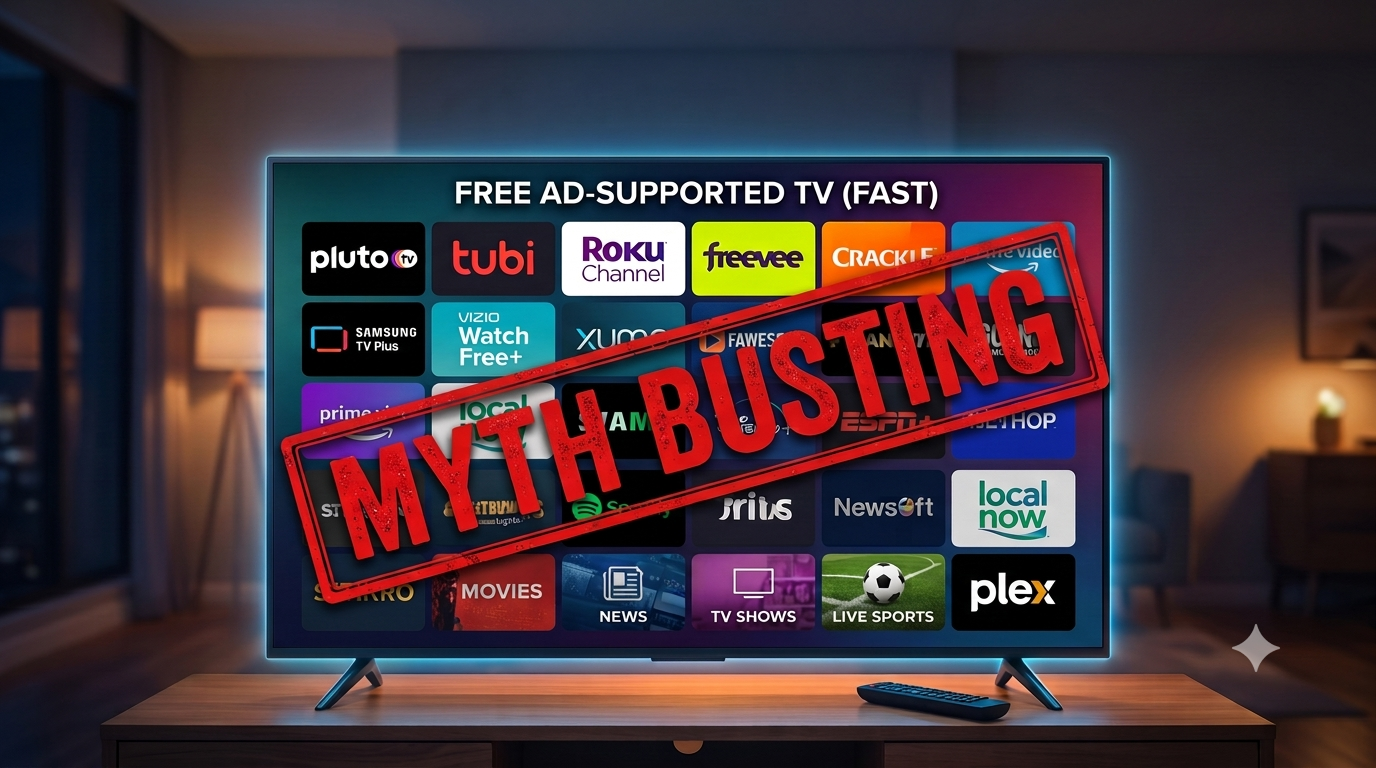
For too long, FAST inventory has been misunderstood as the “leftovers” of television, unsold programming, discounted ad space, or low-value inventory that could not command premium demand.
That perception didn’t come out of nowhere. It ties back to the older TV buying world, where the best placements were typically sold first and whatever remained at the end of the sales cycle was treated as remnant.
That was how the traditional television world worked. But that’s not how FAST works today.
FAST has become a major part of the modern streaming television ecosystem, delivering professionally produced, full-screen programming across news, sports, entertainment, lifestyle, local, and multicultural channels to more than 130 million Americans every day. That accounts for 38% of the population.
Premium FAST creates value on both sides of the screen: advertisers reach real TV audiences in trusted, full-screen content environments, while viewers get free access to both the familiar television experience they love and novel streaming-first content, with the flexibility of digital.
The fact that FAST is free to viewers — or bought programmatically — does not make it lower quality. It simply means the model has changed.
So let’s set the record straight. Here are the biggest myths about today’s FAST inventory that need clearing up.
Myth #1: FAST is mostly remnant inventory
Truth: FAST increasingly includes premium, full-screen TV programming across news, sports, entertainment, lifestyle, local, and multicultural channels.
While history still shapes how some buyers think, today, many FAST channels are built around professionally produced programming, recognizable content libraries, and viewing experiences designed for the household TV screen.
And importantly, FAST inventory is now part of more than 60% of TV streamers’ chosen TV experience, not an accidental or secondary placement. People are intentionally watching these channels the same way they have always watched television: to be informed, entertained, and engaged.
For advertisers, that means FAST can offer real scale in premium, brand-suitable environments, not just leftover impressions.
Myth #2: Free means low quality
Truth: Free describes the viewer access model, not the value of the content.
This is one of the easiest myths to understand, and one of the most important to move past.
FAST is free because it’s ad-supported, not because the programming is of lower value. Viewers are choosing FAST because it gives them easy access to familiar, lean-back television without asking them to add yet another subscription to the monthly tally of household bills.
Many FAST channels feature programming from established media companies, trusted content owners, and well-known libraries. The consumer price point is free. Viewer attention, content quality, and the advertising opportunity is still highly valuable.
Myth #3: FAST is just filler for unsold ad dollars
Truth: FAST has become a planned media channel for advertisers looking to reach streaming audiences in TV-like environments.
As more viewing shifts into streaming — projected by eMarketer to represent more than half of all U.S. TV viewing time — FAST is becoming a more intentional part of the media mix.
Advertisers are not only using FAST as a popular option for remaining budget spend at the end of a campaign, they’re using it to extend reach, connect with cord-cutters, and place messages inside full-screen, lean-back programming environments.
That distinction matters.
For campaigns that still need the emotional power of TV but want more flexibility and targeting, FAST can serve a strategic role from the start of the media buying plan.
Myth #4: Programmatic means leftover
Truth: Programmatic is a transaction method, not a quality signal.
One of the most persistent misconceptions in advertising is that anything bought programmatically must be lower quality. That perception is left over from the early days of digital when programmatic was associated with excess online supply and lower-value desktop placements. But in today’s streaming marketplace, programmatic simply describes how media is transacted.
Premium FAST inventory can be accessed through programmatic pipes, private marketplaces, direct deals, or brand-direct relationships.
The quality depends on the content, the supply path, the data, the transparency, and the partner, not whether automation is involved.
Myth #5: Affluent households don’t watch FAST
Truth: FAST is not limited to budget-conscious viewers or cord-cutters looking for the cheapest possible option. It is becoming a mainstream viewing behavior across income levels.
The assumption that affluent households only watch subscription streaming does not hold up anymore. According to Roku and Horizon Media’s 2026 FAST research, 61% of FAST viewers report annual household incomes of $150,000 or more, and 64% hold a graduate degree.
That matters because it reframes FAST as a choice, not a compromise. Viewers are not only turning to FAST because it is free; they are watching because the experience is easy, familiar, and increasingly filled with content they actually want.
For advertisers, that means FAST can reach valuable, educated, high-income households in full-screen, brand-suitable streaming environments, not just audiences assumed to be priced out of subscription TV.
Myth #6: FAST audiences are too fragmented to matter
Truth: Fragmentation is real, but so is scale.
There’s no question that streaming has created a more complex viewing landscape. Audiences are spread thin across apps, services, devices, and channels, and that can make the ecosystem feel harder to navigate than traditional TV.
But fragmentation does not mean FAST is insignificant.
Viewers are spending close to five hours per day across free ad-supported streaming services, smart TV platforms, and live-style channels, creating meaningful opportunities for advertisers to reach audiences at scale.
The key is not to dismiss fragmentation, but to organize it. That’s why programmatic is actually the ideal way to buy it. It brings better supply paths, better transparency, and better ways to activate the audience opportunity that is already there.
Myth #7: FAST lacks the credibility of traditional TV
Truth: FAST delivers many of the same strengths advertisers have always valued in television.
FAST brings together full-screen viewing, expected ad breaks, and contextually relevant programming environments. In many ways, it recreates the familiar television experience viewers already understand but through streaming delivery.
That matters because TV advertising has always been powerful for more than just reach. Environment matters. Attention matters. Context matters.
When a message appears in a full-screen, lean-back setting, FAST delivers much of the same credibility and emotional impact that made traditional TV so valuable in the first place.
No longer an emerging channel
FAST’s mass appeal and adoption are clear signs that television has evolved. Audiences still want the familiar experience of channels, programming, and big-screen viewing, they just just want it delivered in a more flexible, streaming-first way.
For advertisers, that means FAST deserves to be evaluated on what it actually delivers: real audiences, premium content environments, sight, sound, and, motion storytelling, and the ability to buy with more precision and transparency than traditional TV ever allowed.
The quality question is no longer whether FAST can be premium. The better question is whether buyers know how to identify and access the best of it.
As more audiences shift into free ad-supported streaming environments, FAST is less of an “emerging channel” and more of an important path to the audiences, environments, and big-screen moments that still make TV matter.
The OrkaTV focus
At OrkaTV, we believe it’s time to move past outdated assumptions about FAST and look at the category for what it has become: a powerful, premium, and increasingly mainstream way to reach today’s streaming audiences.
OrkaTV monetizes 4,000+ FAST channels and reaches 84%+ of U.S. households, giving advertisers a more direct path into the streaming TV environments where viewers are already watching.
With a 100% focus on streaming TV, OrkaTV helps advertisers reach target households in full-screen, TV-like environments, break through the noise of fragmentation, and access premium FAST and CTV inventory with more transparency and control.
The goal is simple: help marketers get past old myths, reach real audiences on the biggest screen in the home, and build campaigns that meet and exceed their goals.